

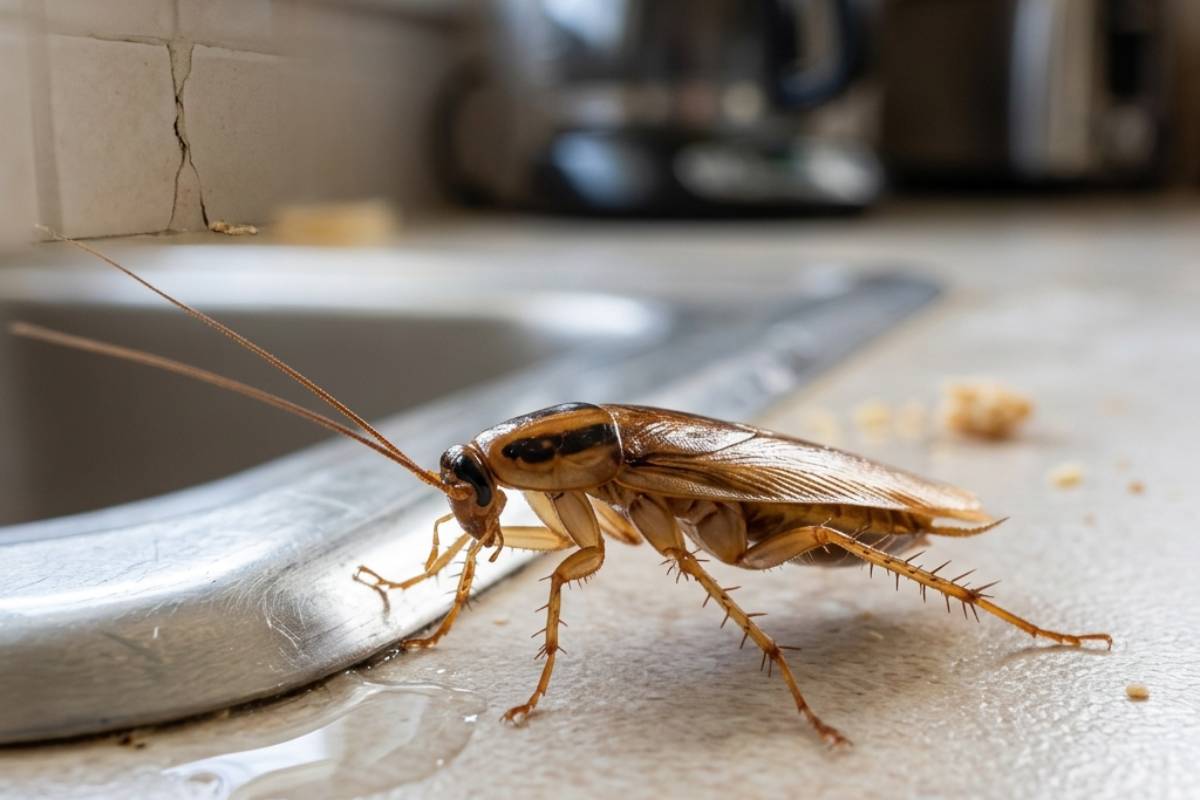

You spotted one cockroach in the kitchen last night. By the time you read this, there are almost certainly more hiding behind the stove.
German cockroaches are the most successful indoor pest on the planet, not because they are large or aggressive, but because they breed faster than most people respond. They live exclusively inside human structures, which means once they are in, the environment works entirely in their favour.
The stakes are not trivial: these insects contaminate food, trigger asthma attacks, and carry pathogens linked to food poisoning. A small infestation becomes a large one within weeks, and large infestations respond poorly to generic sprays from the hardware store.
This guide covers everything required to identify, understand, and eliminate German cockroaches, including which treatments work, which ones waste money, and when to call a licensed pest manager.
What Is the German Cockroach?
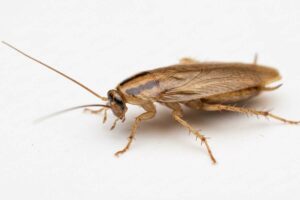
Blattella germanica is 12 to 15 mm in length, light brown to tan in colour, and identified by two parallel dark stripes running down its pronotum (the shield behind its head). Both sexes have wings, but they rarely fly. Flight is not how they spread.
They spread by hitching rides. Second-hand appliances, cardboard boxes, grocery bags, and restaurant supply deliveries all serve as vectors. Once one pregnant female enters a building, the infestation begins.
German cockroaches are almost entirely indoor pests. Unlike Australian native cockroach species that live outside and occasionally wander in, Blattella germanica does not survive for long outdoors. Every specimen found indoors represents an established population, not a stray.
Life Cycle and Why Speed Matters
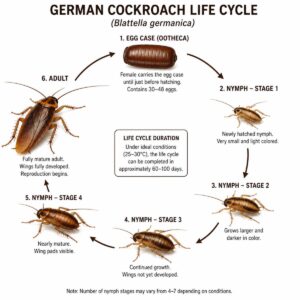
A female German cockroach carries her egg case (ootheca) until just before hatching. Each case holds around 40 eggs. She produces multiple oothecae across her adult lifespan.
According to NC State Extension, it takes anywhere from 70 to 100 days for a German cockroach to reach adulthood, broken into a 20 to 30-day egg incubation period, 40 to 60 days of nymphal development, and a short mating period to complete the cycle.
That 70 to 100-day window means three or four generations can be established within a single year. Every delay in treatment is not neutral; it is an accelerant.
How to Identify a German Cockroach Infestation
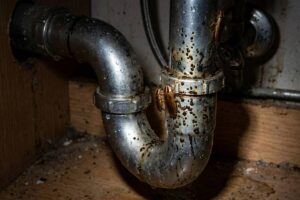
Faecal spotting is the fastest indicator. German cockroaches leave small, dark deposits resembling ground pepper around harbourage sites: behind the fridge, under the stove, inside cabinet hinges, and near the sink plumbing.
Ootheca (egg cases) are small, dark brown capsules roughly 8 mm long. Finding one or more in kitchen drawers, appliance crevices, or under countertops confirms breeding activity, not merely a passing individual.
Daytime sightings signal a population under pressure. German cockroaches are nocturnal. When they appear in daylight, the harborage site is overcrowded and the infestation is well-established.
Musty or oily odour indicates a heavy infestation. The scent comes from aggregation pheromones, and it intensifies with population size. If a kitchen smells off with no obvious food source, run a sticky trap overnight near the stove or dishwasher to confirm.
Health Risks You Cannot Ignore
German cockroaches do not simply contaminate surfaces by walking across them. They regurgitate during feeding, deposit faeces on food contact surfaces, and shed exoskeleton fragments that become airborne.
A single female German cockroach produces up to 1,000 units of the major allergen BlaG1 each day, found in her saliva, faeces, eggs, and shed cuticle. In a home with heavy infestation, allergen exposure is effectively continuous, comparable to living in a space where pollen is constantly introduced into every surface and the air.
The CDC identifies Blattella germanica as a known disease vector. Pathogens linked to German cockroach infestation include Salmonellosis, which causes diarrhoea, fever, and abdominal cramps within 12 to 72 hours of exposure. Other organisms, including Klebsiella species, Pseudomonas, and Staphylococcus aureus, have been isolated from cockroach bodies in hospital and residential environments.
Children and anyone with pre-existing respiratory conditions face the highest risk. Research has shown that eliminating the infestation greatly reduces allergen levels in the home and leads to measurable reductions in asthma events. The infestation and the health outcome are directly linked.
Why German Cockroaches Are Hard to Eliminate
Resistance to insecticides is the primary reason DIY treatments fail.
Insecticide resistance in German cockroaches has been confirmed in 23 countries across four continents, with resistance documented against at least 60 insecticidal active ingredients, with particularly high prevalence among pyrethroids. Most consumer aerosol sprays are pyrethroid-based.
Research comparing total release foggers (bug bombs) to gel baits found that foggers failed to reduce cockroach populations entirely, while similarly-priced gel baits caused significant population decline. The fogger also left pesticide residues on kitchen surfaces at levels up to 603 times higher than baseline. You expose yourself to more chemicals and kill fewer cockroaches.
Their biology compounds the problem. Cockroaches shelter deep in cracks and wall voids where surface sprays cannot reach. The female carries her ootheca on her body until hatching, protecting the eggs from contact with pesticides. Killing the adults does not kill the next generation.
Treatment Options Compared
| Treatment Method | Effectiveness on German Cockroaches | Resistance Risk | Safety Profile | Cost Range (AUD) |
| Aerosol spray (consumer) | Low to nil | High pyrethroid resistance | Moderate (surface residue) | $10-$30 |
| Total release fogger | Negligible | Does not penetrate harborage | Poor (high chemical deposit) | $15-$50 |
| Cockroach gel bait (e.g., Maxforce Gold) | High | Low if rotated | Excellent (targeted, low volume) | $30-$80 DIY |
| Insect growth regulator (IGR) | High (disrupts reproduction) | None known | Excellent | Professional only |
| Professional IPM treatment | Very high (multi-strategy) | Managed through rotation | Excellent | $150-$400+ |
| Boric acid dust | Moderate | Low | Low-moderate if misapplied | $15-$40 |
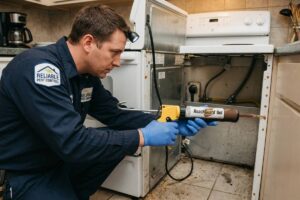
Integrated Pest Management for German Cockroaches
Integrated Pest Management (IPM) is not one treatment. It is a sequence of coordinated actions that attacks the population at multiple points in its life cycle simultaneously.
Step 1: Inspection and sticky trap deployment
Place sticky traps along wall-floor junctions near the stove, refrigerator, dishwasher, and under-sink cabinet. Leave for 24 to 48 hours. Count and map where captures are highest. That is where harborage sites are concentrated.
Step 2: Sanitation
Remove food and water access. Fix dripping taps, seal food in airtight containers, and clear grease from behind appliances. German cockroaches can sustain a population on cooking residue alone. Sanitation alone does not eliminate an infestation, but it makes every subsequent treatment more effective.
Step 3: Gel bait application
Apply gel bait in small pea-sized amounts directly at harborage sites identified in Step 1. Target cracks, hinges, and cavity edges. Do not apply near residual sprays as these repel cockroaches from the bait. Gel bait works through secondary kill: cockroaches consume it, return to the harborage, and die there. Other cockroaches then consume the dead and become exposed to the active ingredient.
Step 4: Insect Growth Regulator (IGR)
IGRs do not kill cockroaches directly. They disrupt moulting and sterilise females by mimicking juvenile hormone. Combined with gel bait, they break the reproductive cycle and prevent the next generation from maturing. This step is typically performed by a licensed pest manager as part of a professional service.
Step 5: Follow-up
Return to sticky traps after two to three weeks. Population activity should drop sharply. If capture rates remain high, re-inspect harborage sites and rotate bait product to manage resistance.
Prevention: Closing the Door
Inspect everything arriving in the kitchen. Second-hand microwaves, toasters, and coffee machines are common entry vectors. Check thoroughly before bringing them inside.
Seal entry points. Pipe penetrations through walls, gaps behind cabinetry, and joins under the sink are preferred ingress routes. Silicone sealant applied to these gaps removes both access and harborage.
Reduce humidity. German cockroaches thrive in warm, humid environments. Fix dripping taps, run the exhaust fan during and after cooking, and ensure dishwashers seal correctly.
Reducing standing water and organic debris around the property also supports home mosquito control, since the same humid conditions that attract German cockroaches indoors also breed mosquitoes in outdoor spaces.
Maintain a regular inspection schedule. A single sticky trap check every six to eight weeks costs nothing but five minutes. Catching a new introduction at two cockroaches is a fundamentally different problem to catching it at two hundred.
In commercial environments such as restaurant kitchens and staff break rooms, maintaining a professional office cleaning schedule that targets grease buildup behind appliances and under sinks removes the food sources that sustain German cockroach populations between treatments.
Conclusion
German cockroaches are not a hygiene problem you can clean your way out of. They are a biological problem that requires targeted, correctly sequenced treatment. Gel bait combined with IGR and source elimination is the evidence-based standard. Aerosols and foggers waste money, increase chemical exposure, and leave the population intact. If the infestation is established, a licensed pest manager with access to professional-grade products and resistance management protocols is the fastest and most cost-effective path to elimination. For properties, SWAT Pest Control in Brisbane offers professional German cockroach treatment using IPM-based protocols, including gel bait and IGR programs designed to manage insecticide resistance.