


Table of Contents
- Why Wall Damage Rarely Stays Small
- Sign 1: Cracks Wider Than a $2 Coin Edge
- Sign 2: A Sagging or Bowing Ceiling
- Sign 3: Drummy, Hollow-Sounding Walls
- Sign 4: Bubbling or Blistering Plaster
- Sign 5: Damp Patches and Recurring Mould
- Sign 6: Peeling Paint That Never Stays Fixed
- Sign 7: Nail Pops and Popped Joint Tape
- Crack Severity: What Needs a Plasterer vs an Engineer
- What to Do Before the Plasterer Arrives
- Conclusion
Why Wall Damage Rarely Stays Small
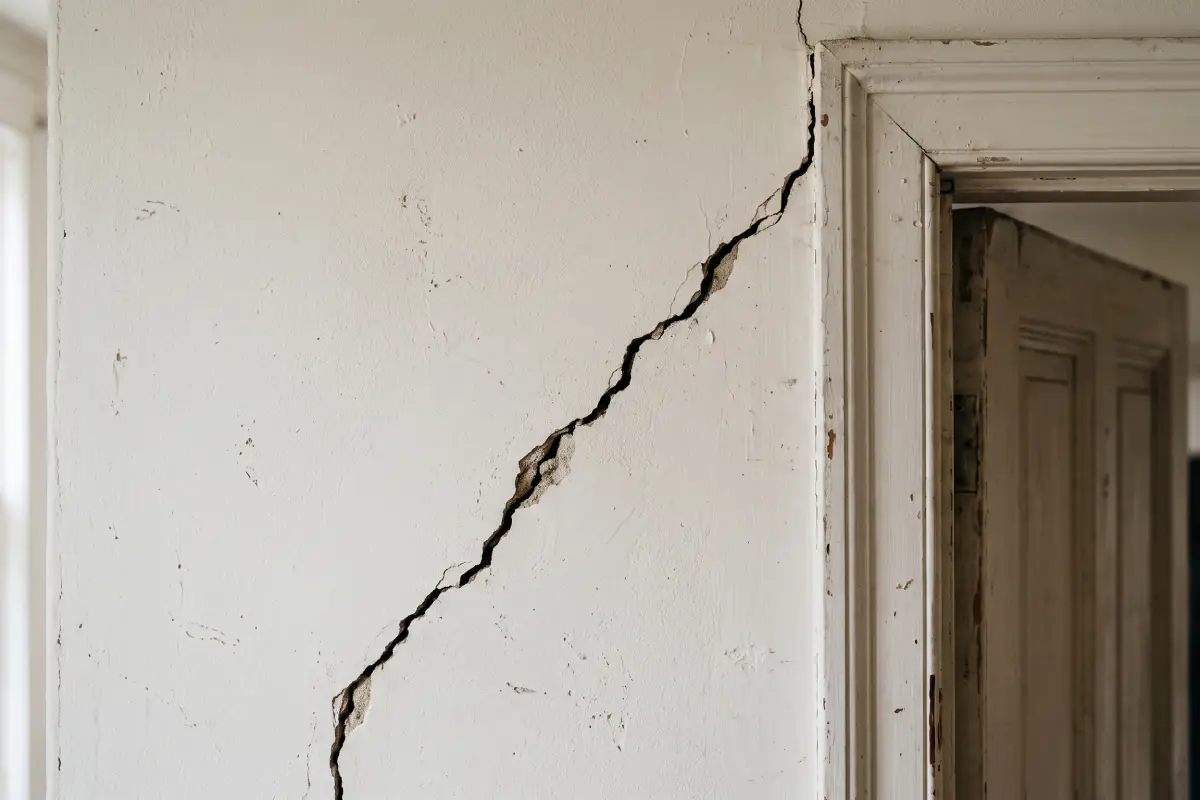
The CSIRO’s homeowner guide on footing performance classifies any wall crack wider than 5mm as damage category 3 or above, the point where repair moves beyond a cosmetic patch. That is roughly the thickness of a $2 coin, and most people walk past cracks that size for months.
Plaster and plasterboard are sacrificial surfaces. They show stress before your frame, footings, or waterproofing fail in ways that cost real money. Reading the signs early usually means a plasterer for a few hundred dollars instead of a builder for tens of thousands.
This guide covers the seven warning signs that mean you should book a plasterer now, and the smaller set of symptoms that mean you should call a structural engineer first.
Sign 1: Cracks Wider Than a $2 Coin Edge
Hairline cracks under 1mm are normal. Houses expand and contract with temperature and soil moisture, especially on the reactive clay soils common across Australian suburbs, and fine cracking follows.
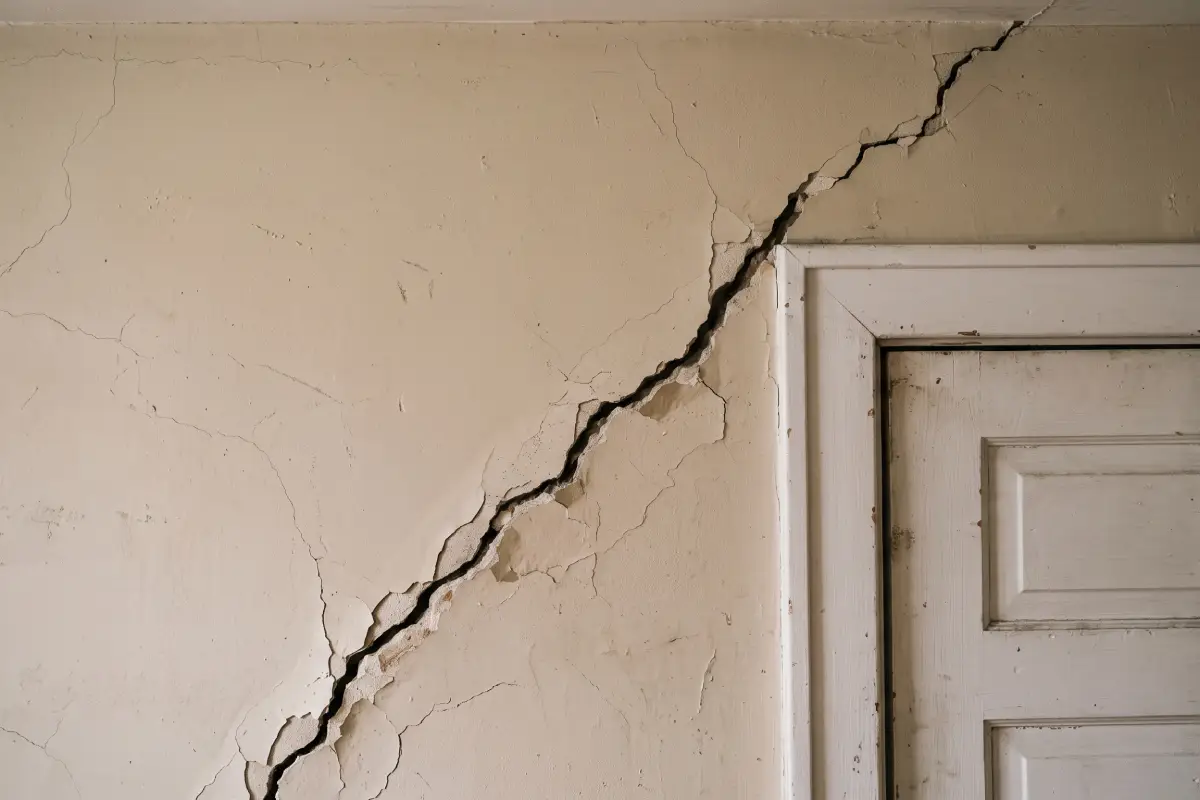
The warning signs are width and pattern. A crack you can slot a coin into, a crack that keeps growing after you fill it, or diagonal cracks radiating from door and window corners all point to movement the plaster can no longer absorb.
Stair-step cracks that follow mortar lines in brickwork, or cracks that appear on both sides of the same wall, need an engineer’s eye before any plasterer touches them. Patching over active movement just gives the crack a fresh surface to reopen through.
Sign 2: A Sagging or Bowing Ceiling
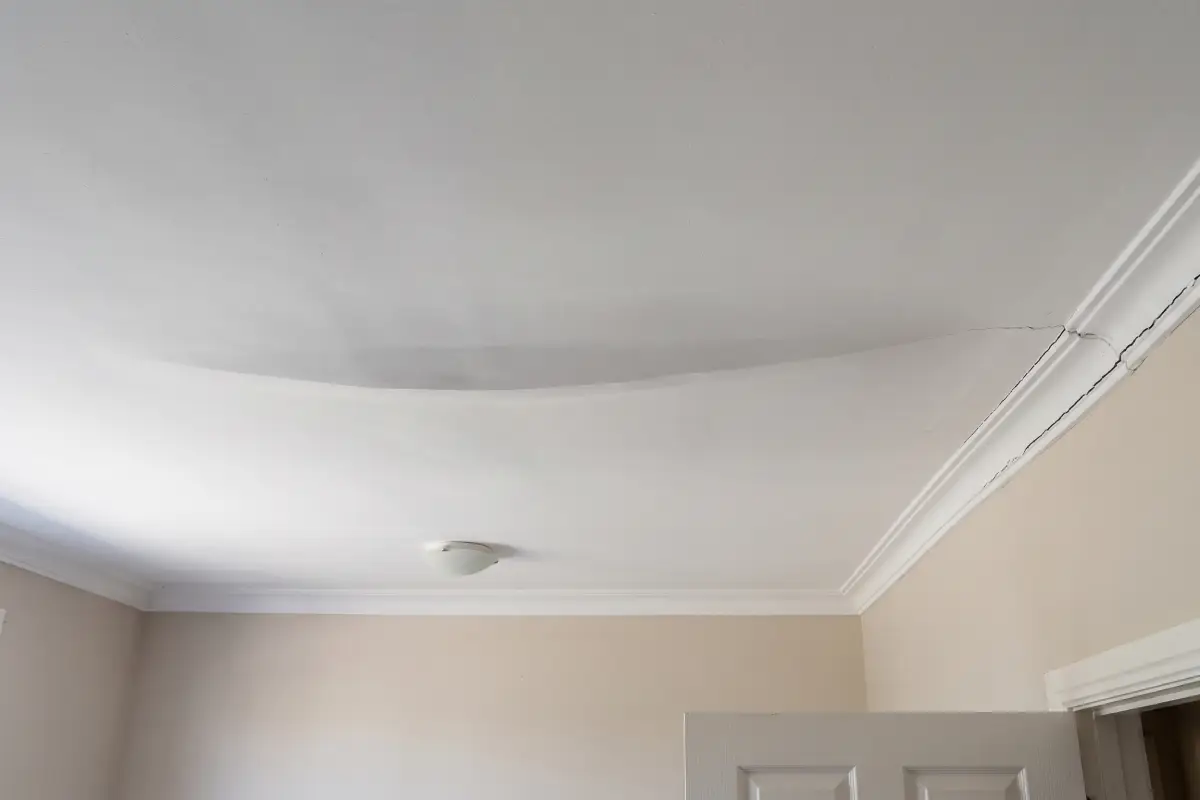
A ceiling that dips, ripples or pillows between joists is the one sign on this list with a genuine safety deadline. Plasterboard ceilings fail when the adhesive or fixings let go, and once a section starts sagging, the extra load transfers to the fixings around it.
Government building authorities in Western Australia have issued repeated public warnings about ceiling collapse after a series of failures in homes there, and their advice applies nationally: a sagging ceiling, cracking noises overhead, or a visible gap opening at the cornice line means keep people out of the room and get a professional in urgently.
A plasterer can re-fix and replace sagging sheets if the structure above is sound. If the sag follows a roof leak or heavy storm, have the cause fixed at the same time or the new ceiling inherits the same fate.
Sign 3: Drummy, Hollow-Sounding Walls
Knock gently across a solid plaster wall in an older home. A healthy wall sounds dense. A “drummy” section sounds hollow, because the plaster has separated from the masonry or lath behind it.
Drummy plaster is failure in progress. The bond is gone, and the plaster is held up by paint, friction and habit. Vibration from a slammed door or nearby traffic can bring a delaminated section down in one piece.
This is a plasterer’s core trade: cutting back the loose section to sound edges and re-plastering, or in heritage homes, re-adhering original plaster to preserve it. DIY filler cannot fix a bond failure behind the surface.
Sign 4: Bubbling or Blistering Plaster
Bubbles, blisters or a texture like orange peel forming under paint mean moisture is trapped inside the wall and pushing outward. The plaster is absorbing water faster than it can dry.
Common culprits include leaking shower recesses on the other side of the wall, failed flashing around windows, and rising damp in older solid-brick homes without an intact damp-proof course.
A plasterer will need to remove the affected plaster back to a dry, sound substrate, but the moisture source must be found and fixed first. Skipping that step means paying for the same repair twice.
Sign 5: Damp Patches and Recurring Mould
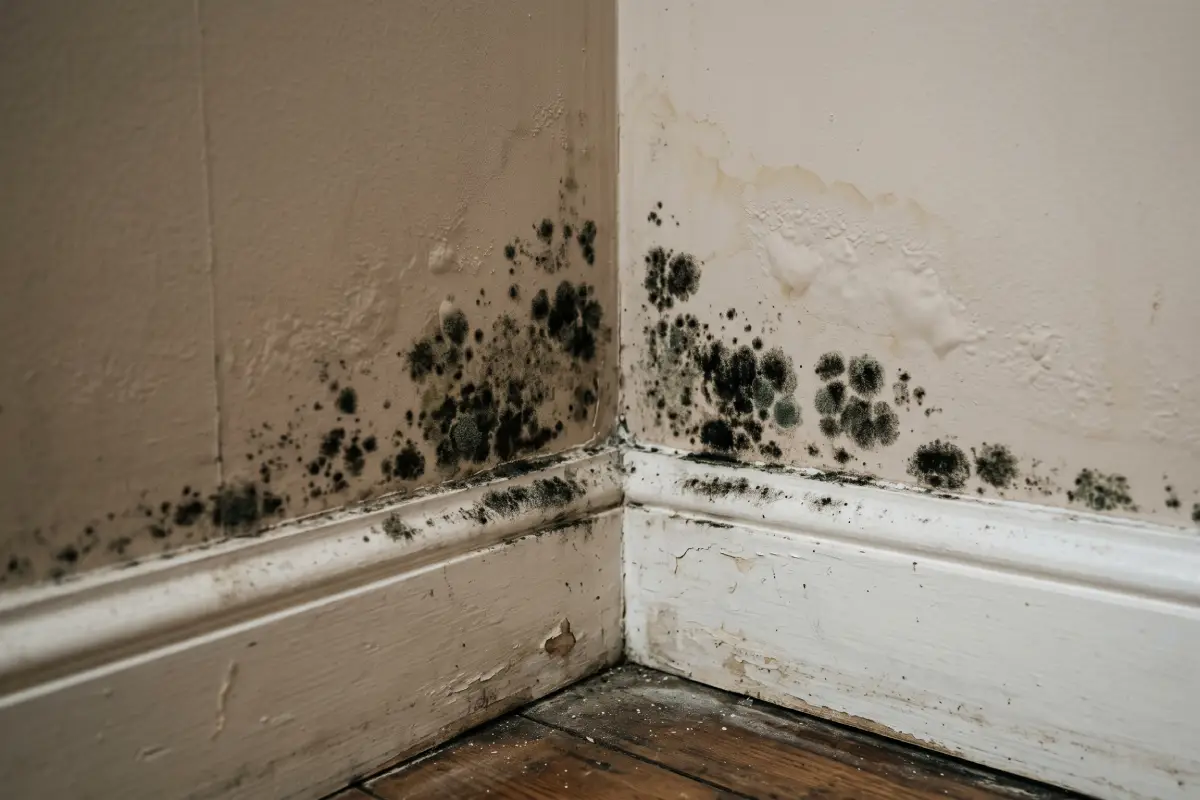
A damp patch that darkens after rain, tide marks creeping up from skirting boards, or mould that returns within weeks of cleaning all indicate the wall itself is wet, not just the surface.
Mould on plasterboard is more than cosmetic. Plasterboard’s paper facing feeds mould growth, and once colonised, the sheet usually needs replacement rather than treatment. Wiping the surface removes the visible bloom and leaves the roots in the paper.
Book the plasterer after the leak, drainage or ventilation problem is resolved. Ask them to use wet-area or mould-resistant board in bathrooms, laundries and any wall that has failed before.
Sign 6: Peeling Paint That Never Stays Fixed
If you have repainted the same patch twice and it keeps peeling, flaking or “chalking”, the problem sits under the paint, not in it. Paint fails repeatedly when the plaster beneath is powdery, salt-affected or damp.
In older homes, salts drawn up through masonry crystallise inside the plaster and break down its surface. Painters call it efflorescence when it shows as white fuzz. No paint system bonds to it for long.
A plasterer can hack off the affected area, treat or isolate the salts, and re-plaster with an appropriate system. That gives your next coat of paint something stable to hold onto.
Once the surface is stable, picking from current paint colour trends is a safer bet than reaching for whatever tin is left in the shed, since older formulations sometimes bond poorly with fresh plaster.
Sign 7: Nail Pops and Popped Joint Tape
Small round bumps or crescent cracks appearing in lines across a plasterboard wall or ceiling are nail pops: fixings pushing back through the surface as timber framing dries and shrinks. A few in a new home are common in the first couple of years.
Clusters of pops, or joint tape lifting along recessed sheet joins, tell a different story. They suggest movement in the frame, undersized fixings, or sheets installed without enough adhesive.
A plasterer will re-fix with screws into solid timber, re-set the joints and skim the surface flat. Left alone, popped joints let every future movement telegraph straight through your paintwork.
Crack Severity: What Needs a Plasterer vs an Engineer
The CSIRO’s Foundation Maintenance and Footing Performance guide provides the crack classification most Australian building professionals reference. Use it to decide who to call first.
| Crack width | CSIRO damage category | Typical meaning | Who to call first |
| Under 1mm | 0–1 (negligible/fine) | Normal seasonal movement | No one yet; monitor |
| 1–5mm | 2 (slight) | Movement worth watching; repairable | Plasterer |
| 5–15mm | 3 (moderate) | Possible footing or frame movement | Structural engineer, then plasterer |
| Over 15mm | 4 (severe) | Significant structural movement | Structural engineer urgently |
Photograph cracks next to a coin or ruler and date the photos. A crack that stays stable for six months is a very different problem from one that grows 2mm in a season, and that record helps whichever professional you engage.
What to Do Before the Plasterer Arrives
Fix the cause before the symptom. Plumbing leaks, blocked gutters, poor subfloor ventilation and garden beds piled against external walls all destroy new plaster as efficiently as they destroyed the old.
Get the diagnosis in writing on the quote. A good plasterer will name the cause they believe they are repairing, not just the square metres they are covering. If they cannot, get a second opinion.
Check licensing where it applies. Requirements vary by state; in NSW, for example, plastering work above a set value threshold requires a licensed tradesperson, and your state’s fair trading body lists current rules.
If you want that written diagnosis before any work starts, Pro Plaster N Paint in Sydney is worth getting a quote from alongside anyone else on your shortlist.
Conclusion
Your walls fail loudly long before your house fails expensively. Wide or growing cracks, sagging ceilings, drummy plaster, blistering, damp and mould, chronically peeling paint, and clustered nail pops are all signals worth acting on within weeks, not years.
Most of these seven signs need a plasterer directly. The exceptions matter: cracks wider than 5mm, stair-step cracking in brickwork, and any sagging ceiling call for a structural engineer or urgent professional inspection first, with the plasterer following once the cause is resolved.
There is no single answer to “how bad is it” without looking at width, pattern and history, which is why the honest rule is this: fix the cause, document the damage, then let a plasterer make the wall disappear back into the room.